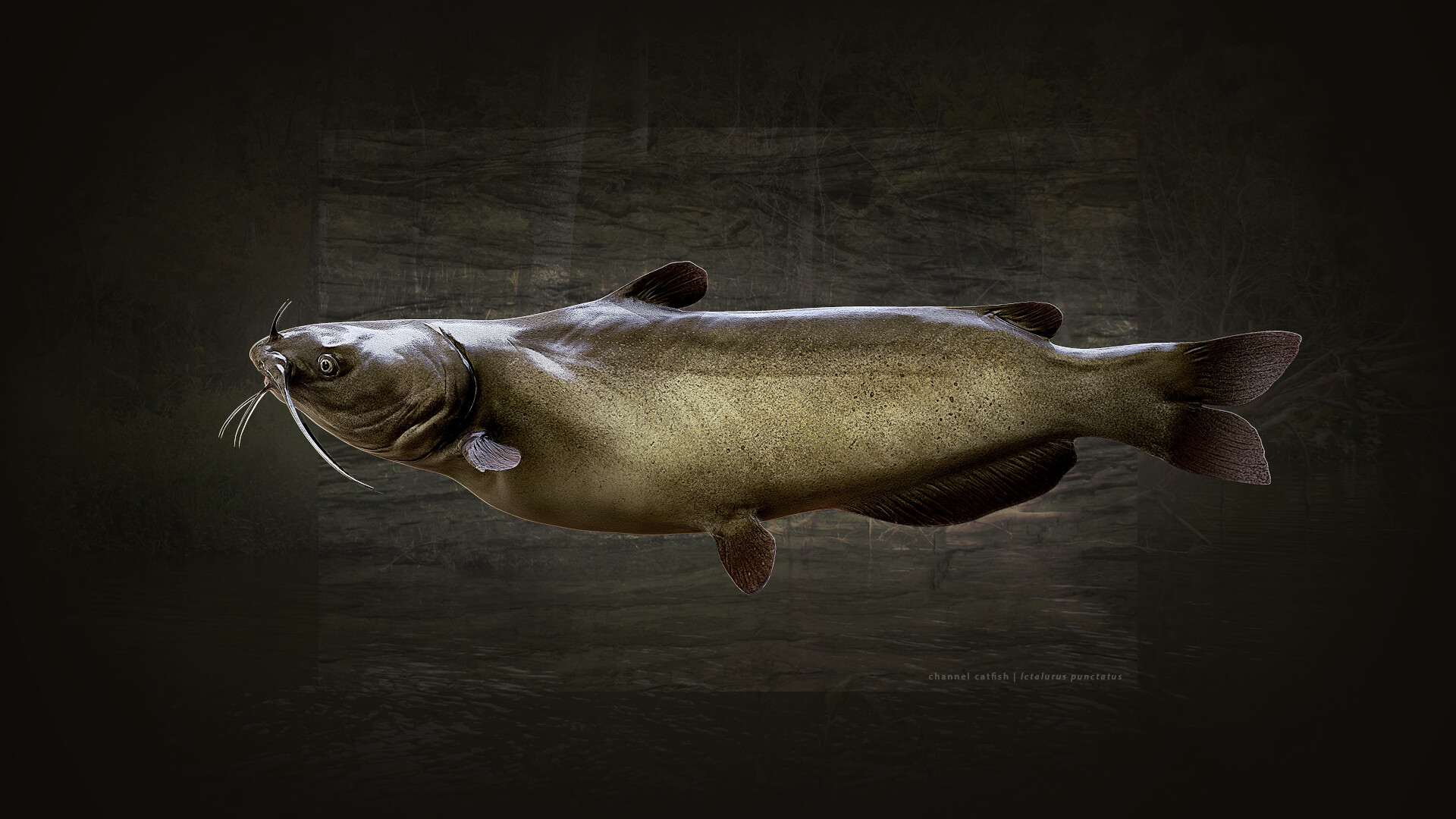
Channel Catfish (Ictalurus punctatus)
Model made in Blender, textures made in Mudbox, final result in Marmoset.
The channel catfish (Ictalurus punctatus) is one of the most common game catfishes in the eastern United States and Virginia waterways. These are voracious omnivores that inhabit muddy water. Members of their genus have incredibly sensitive chemical receptors on their face and barbels (those big whiskers that put the "cat" in catfish) and channels in particular are attracted to amino acids in blood.
They can be identified from other similar catfish by the shape and number of rays on their anal fin (24-29,) deeply forked tail, and olive to gray coloration. Young specimens have distinctive spots along their flanks which fade with age, although many adults still retain a few.
Channels can be fished in most of Virginia's main waterways by using a variety of baits - you will often see anglers using chicken livers and even hot dogs. When landing a catfish, be wary of the bony spines in their pectoral and dorsal fins. I've been jabbed by them and let me tell you - its the worst! When fishing for release, as with all fish, always take care not to touch their delicate gills.
They can get up to 40 lbs, but younger, smaller fish are more readily caught. This actually ends up being in a hungry angler's best interest - the risk of mercury or other heavy metal poisoning increases with the age and size of the fish. Always check with your state's Department of Game and Inland Fisheries to see active advisories, restrictions, and creel limits before partaking.
That being said, channel cats make for a very tasty lunch or dinnerr. Due to this, they are a common species for aquaculture. The farm raised fish you can buy in your grocery store will be alot safer to eat than their wild counterparts - but so long as there's no active advisory in your local water way, there's nothing more satisfying than pulling in dinner yourself!